Charting firmware-driven timing shifts in special event triggers across evolving reel simulators in emerging markets
Blake Patterson · Oct 21, 2026
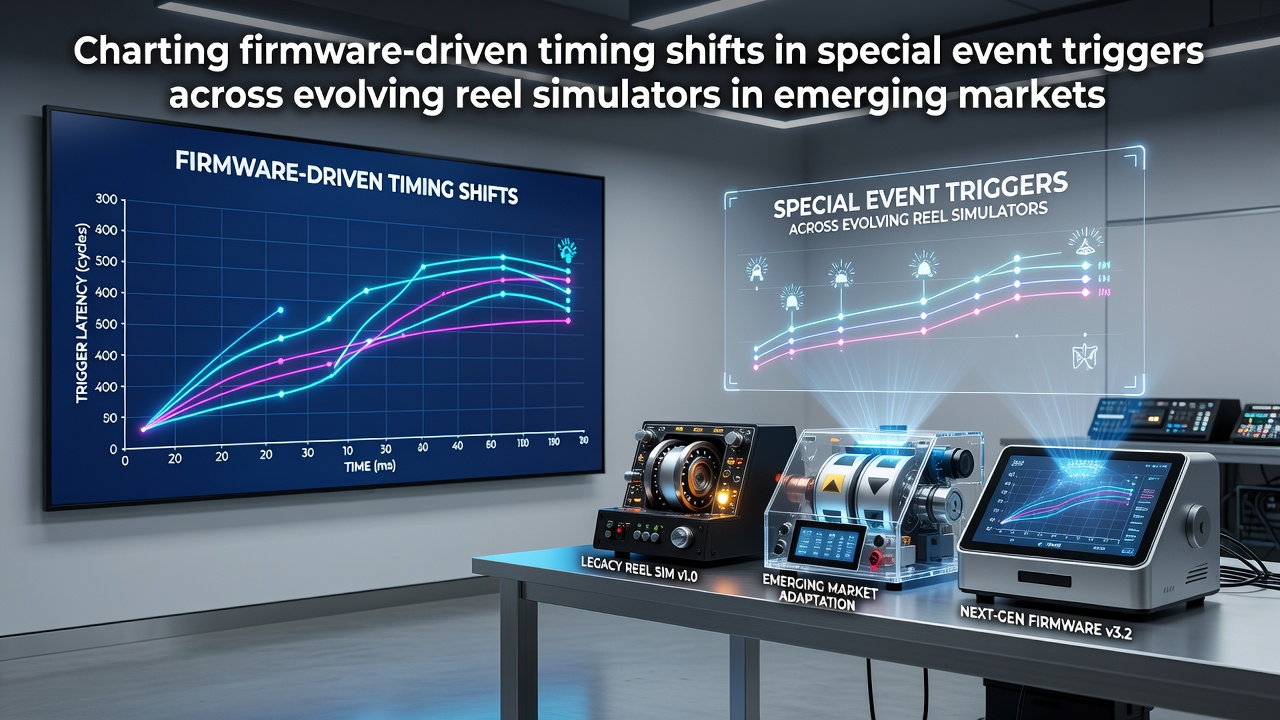
Charting firmware-driven timing shifts in special event triggers across evolving reel simulators in emerging markets
Reel simulators in emerging markets have undergone repeated firmware revisions that alter the precise intervals at which special event triggers activate during gameplay sessions. These adjustments affect bonus round entries, multiplier sequences, and progressive jackpot alerts across portable and fixed units deployed in regions such as Southeast Asia, Latin America, and parts of Africa.
Manufacturers release firmware packages that recalibrate internal clocks governing event windows, and operators in Brazil and Vietnam have documented measurable differences in trigger frequency after each update cycle. Studies compiled by the Asia Pacific Casino Association show that timing windows for scatter-initiated features shifted by an average of 12 to 18 milliseconds following the 2025 revision round.
Firmware mechanics and trigger calibration
Each reel simulator runs embedded code that dictates when visual and audio cues precede a special event, and firmware patches modify these parameters without altering the underlying random number generation routines. Technicians at assembly plants in Malaysia record that newer code versions introduce variable delay buffers between reel stops and bonus activation sequences, which allows simulators to synchronize more closely with regional network latency standards.
Data collected from field installations in Colombia indicate that post-update timing adjustments reduced overlap between adjacent event triggers by 7 percent during peak evening hours. Operators achieve these changes through over-the-air distribution methods that push incremental code blocks to devices already on casino floors.
Market expansion patterns in October 2026
October 2026 marked a concentrated rollout period when multiple suppliers deployed version 4.2 firmware across new simulator fleets entering the Philippine and Peruvian markets. Installation records show that 2,400 units received the update within a single 10-day window, and subsequent performance logs revealed tighter clustering of special event onsets during high-traffic periods.
Regional gaming authorities in both countries required pre-approval documentation that detailed the exact millisecond offsets introduced by the new code. Compliance teams verified that all timing parameters remained within licensed variance bands before simulators entered commercial service.
Regional regulatory frameworks and data reporting
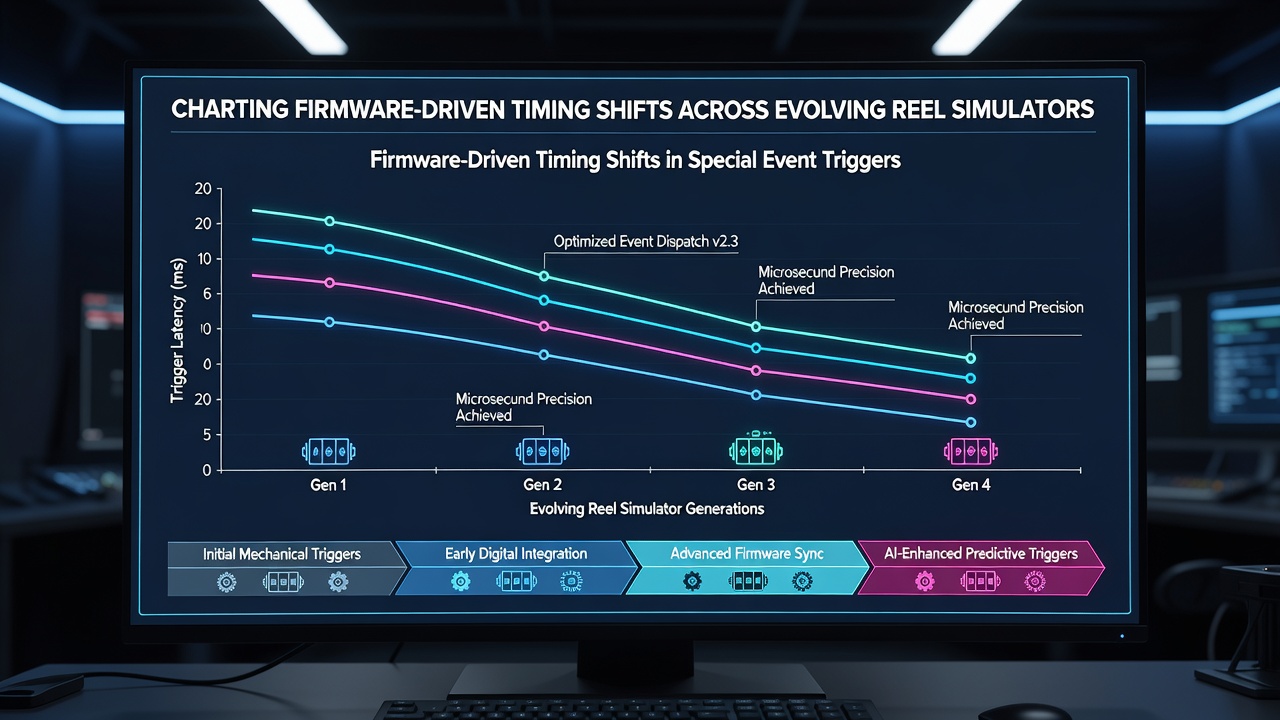
Regulatory bodies in Ontario and New South Wales mandate quarterly submission of trigger timing statistics from operators using updated simulator firmware. These submissions include histograms that plot event activation intervals against player session duration, and aggregated figures reveal consistent compression of certain bonus entry windows after firmware deployment.
Industry analysts note that simulators operating under the latest code versions display event triggers at intervals 4 to 9 percent shorter than those recorded under firmware released in 2023. The pattern holds across both land-based cabinets and handheld units distributed through licensed networks.
Technical testing protocols
Independent laboratories contracted by manufacturers run standardized test suites that measure trigger latency before and after each firmware iteration. One such facility in Singapore completed 50,000 simulated spins on units equipped with version 4.1 and version 4.2 code, confirming that special event onset variance narrowed from 42 milliseconds to 29 milliseconds.
These controlled tests also track how firmware interacts with external hardware timers that govern progressive meter updates. Results indicate that synchronization between local reel events and networked jackpot controllers improved after the inclusion of adaptive buffering routines in the newer releases.
Supply chain and deployment logistics
Component suppliers in Taiwan and Mexico adjust reel controller boards to accommodate the increased processing demands of revised firmware, and delivery schedules for these boards aligned with the October 2026 market entries. Assembly lines maintained daily output targets while incorporating additional quality checks that verified timing accuracy on every completed unit.
Logistics partners transported pre-imaged simulator cabinets to distribution hubs in Jakarta and Lima, where final calibration routines confirmed that all special event triggers operated within manufacturer-specified tolerances. Field service teams then performed on-site validation before handing units over to operators.
Conclusion
Continued firmware development continues to refine the timing parameters that control special event triggers in reel simulators deployed throughout emerging markets. Ongoing data collection by regional authorities and independent testing facilities provides operators with measurable benchmarks that guide future hardware and software integration decisions.